
Last updated September 21, 2026
Free on-site gate assessment - hinges, posts, and your LiftMaster or Nice gate operator checked before anything is quoted
The assessment is free and the quote is the invoice.

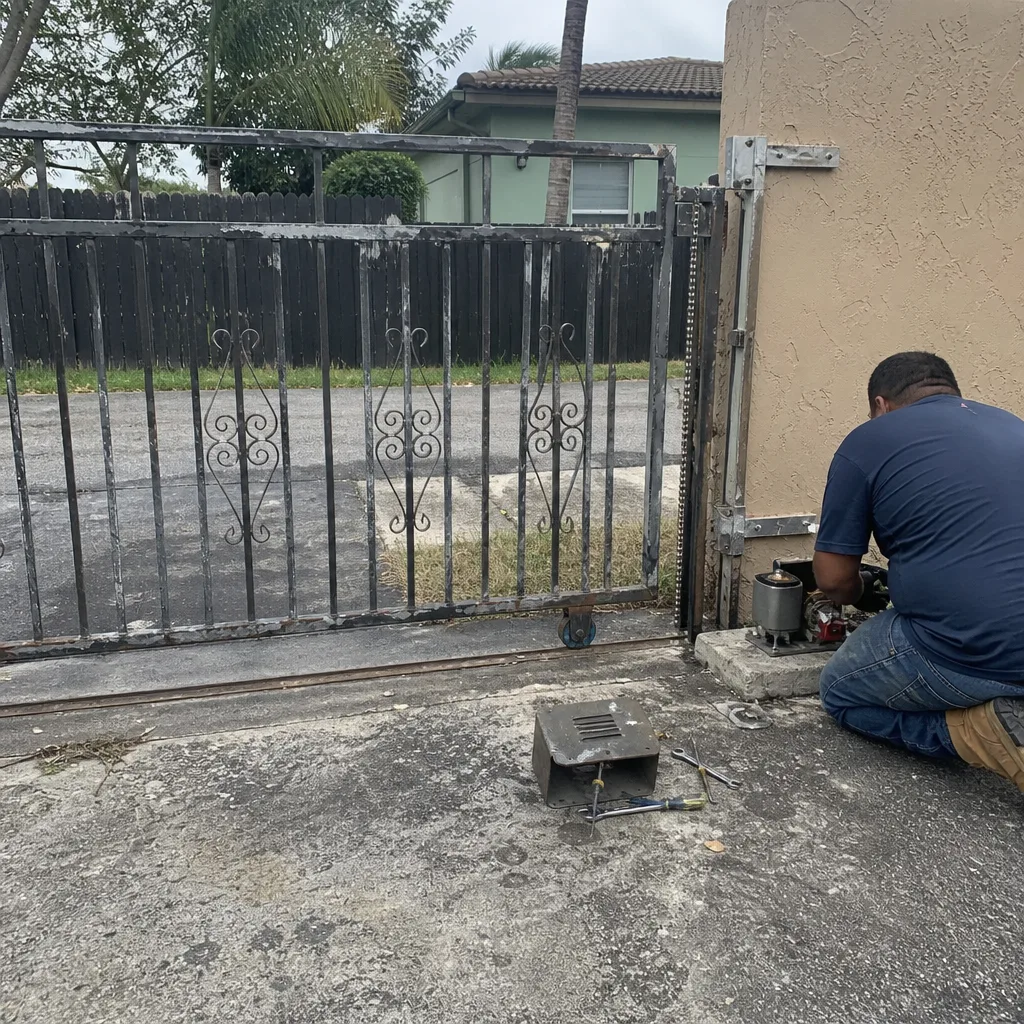 Before
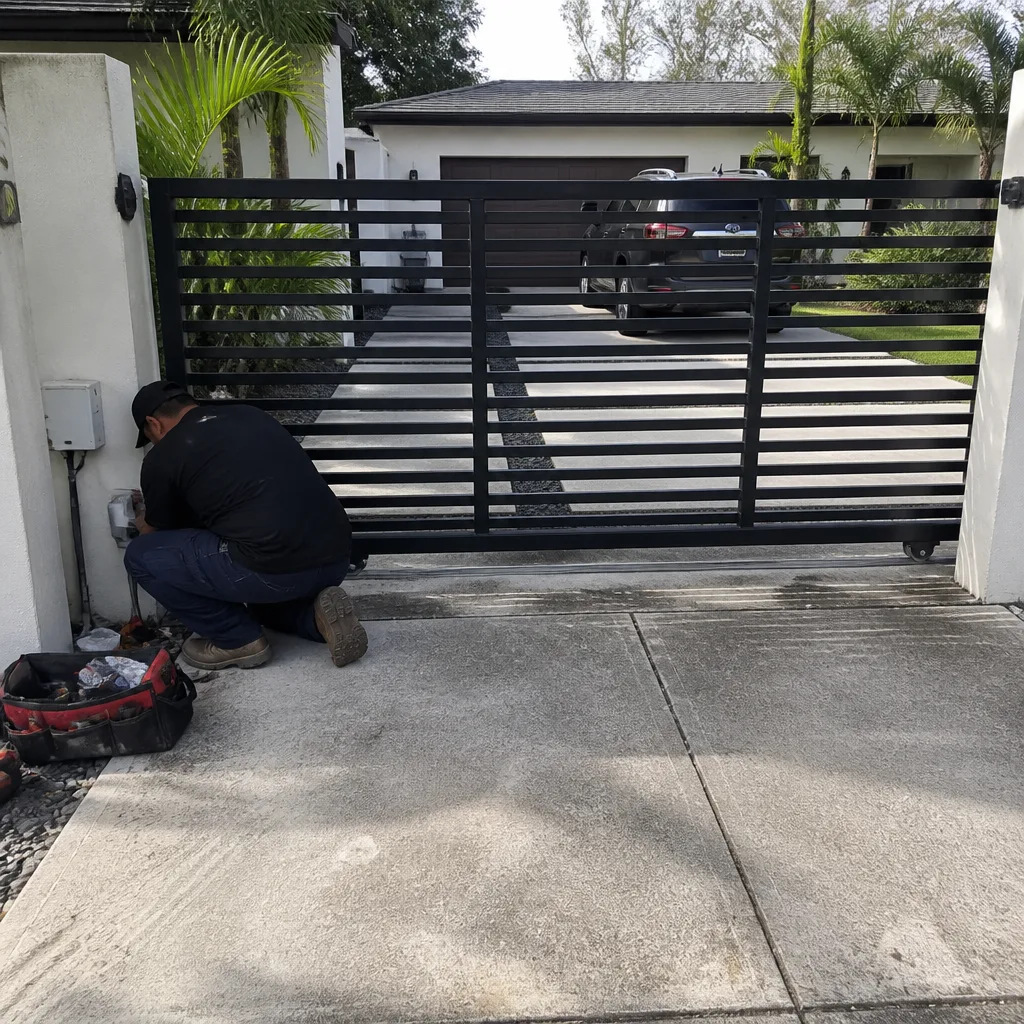 After
After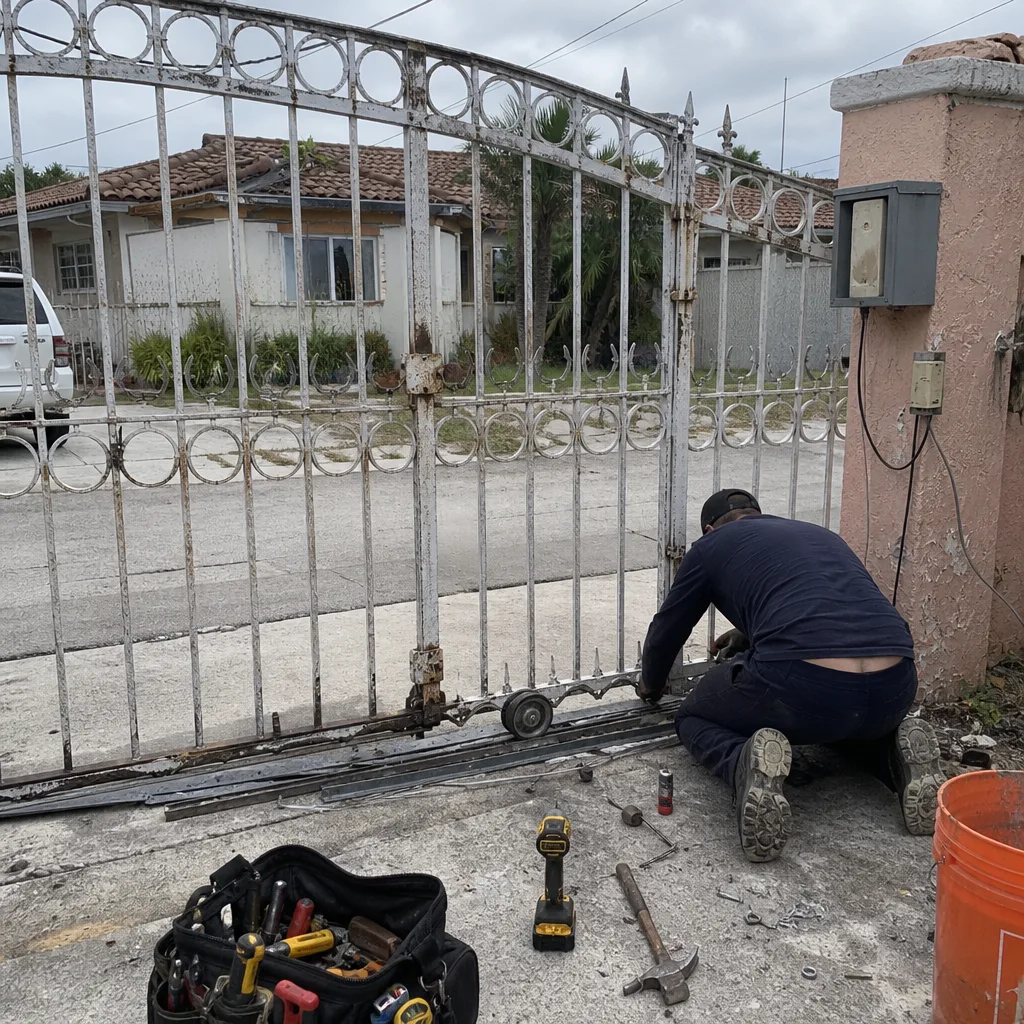 Before
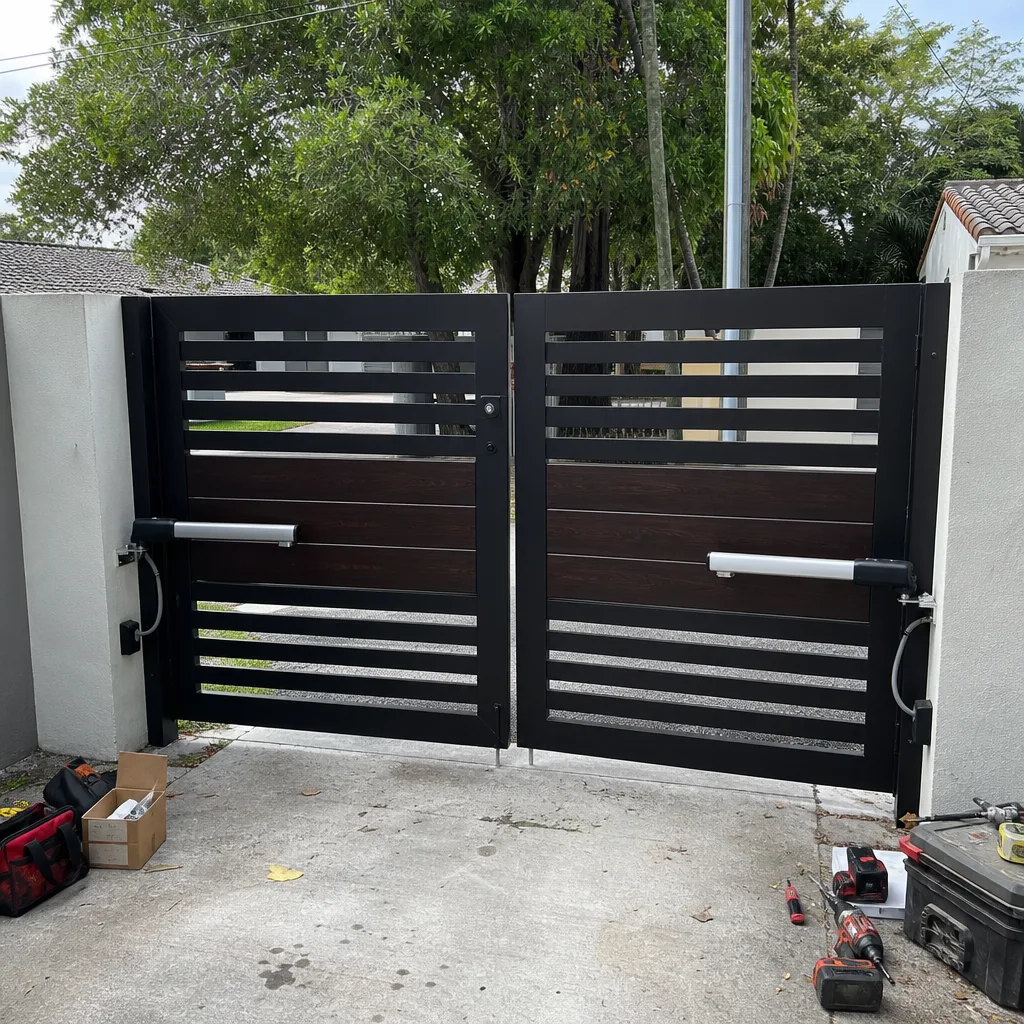 After
After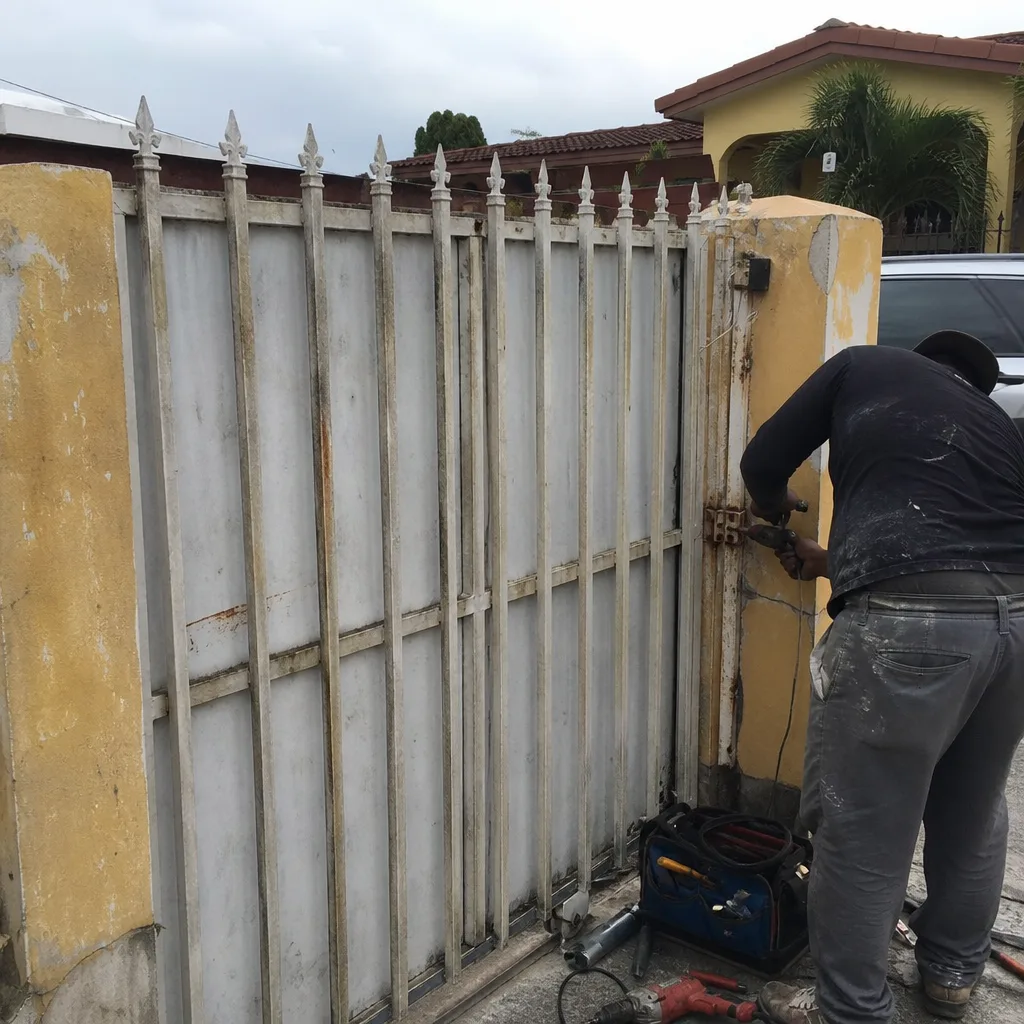 Before
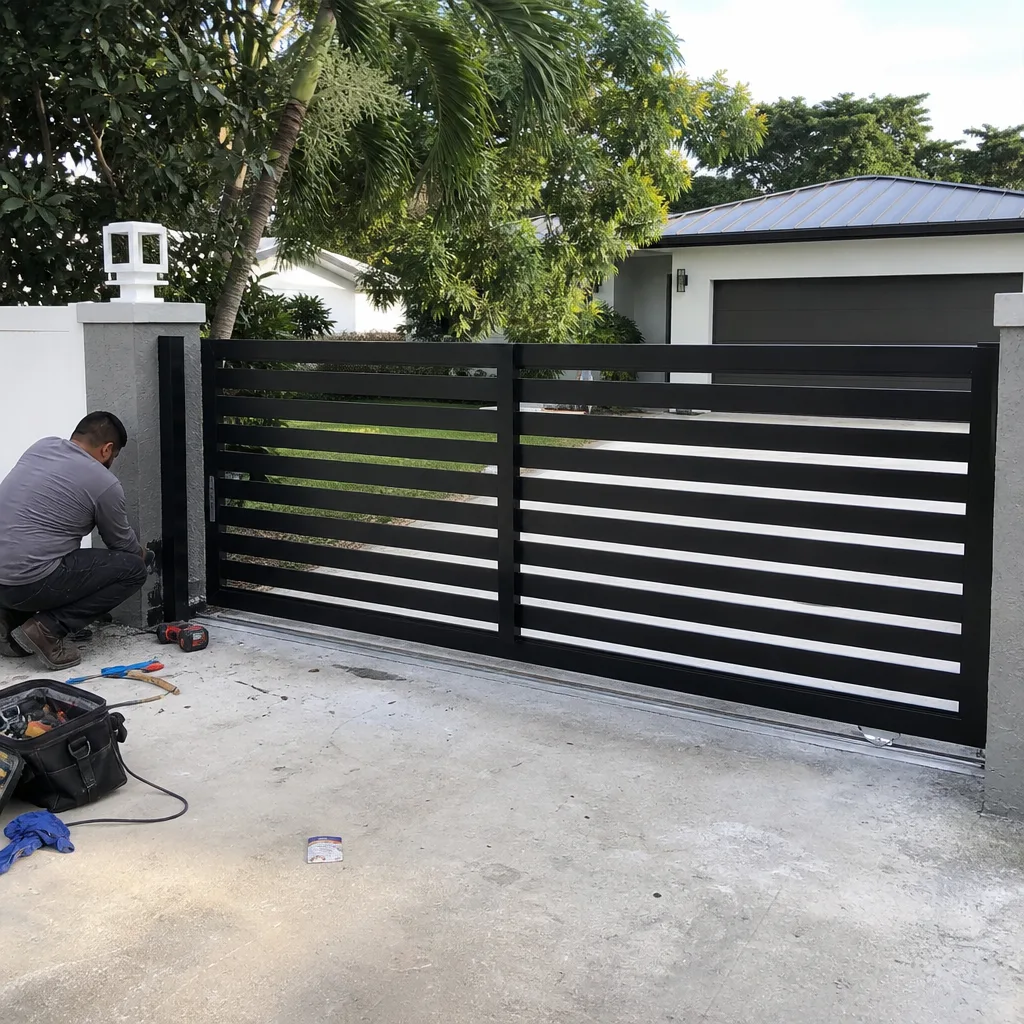 After
AfterGate Repair Permits, Codes & Inspections in FL: What You Need to Know
An unpermitted gate motor installation won’t fail inspection. It’ll pass invisibly, right up until you try to close a home sale and the buyer’s inspector finds the panel wired without a permit on record. That’s not a hypothetical in Miami Gardens. We’ve walked onto properties where the gate worked fine for six years and the seller had no idea the previous contractor never pulled the paperwork. In this guide, you’ll learn the exact line between permit-required and permit-exempt gate work in Florida, what Miami-Dade County actually enforces, how to check whether prior work on your gate is on the books, and how to fix the problem before it costs you a sale. For more on spotting problems early, see our Gate Repair Warning Signs: A Miami Gardens Homeowner’s Reference Guide.
Quick Answer
Most residential gate repairs in Florida, including motor swaps, hinge replacements, and control board repairs, do not require a permit. But in Miami-Dade County, three triggers change that: a new electrical circuit, structural work on gate posts or footings, or a project whose total value crosses the county’s cost threshold. If your gate work falls into one of those buckets, the permit has to come before the work, not after.
Table of Contents
- When a Permit Is Required in Miami-Dade County
- What ‘Like-for-Like Replacement’ Actually Means
- How to Check Whether Prior Gate Work Was Permitted
- How HOA Requirements in Miami Gardens Stack on Top of County Code
- What Happens at Resale When Gate Work Wasn’t Permitted
- Why Written Records Matter More Than Most Homeowners Think
- Common Mistakes to Avoid
- When to Call a Professional
- Frequently Asked Questions
- The Bottom Line
 Before
 After
AfterWhen a Permit Is Required in Miami-Dade County
Florida does not have a single statewide gate permit rule. Building permitting authority sits with local jurisdictions, and in Miami Gardens that means Miami-Dade County code, enforced through the county’s Building Department. The county draws the line using three tests. If any one of them applies to your gate project, the work is not exempt, and a permit is required before the first tool comes off the truck.
Test one is electrical. A new electrical circuit run to a gate motor needs a permit. So does adding a new outlet, running a new branch line from the panel, or installing a gate operator where none existed before. Replacing an existing motor on a circuit that’s already there typically does not. The distinction is the circuit, not the motor. A new circuit is an alteration to the building’s electrical system, and Miami-Dade’s electrical code governs that as a standalone scope of work.
Test two is structural. If the work involves setting new gate posts, pouring new footings, enlarging the existing foundation, or changing the load path of a sliding gate track, the county considers that structural. Removing and re-setting the same post in the same footing with the same diameter is usually exempt. The moment concrete is poured for a new support, the threshold is crossed.
Test three is cost. Miami-Dade uses a project value cutoff for permitting. Small residential jobs below the threshold are exempt by valuation. The threshold changes periodically, so call the county Building Department at (786) 789-0087 or check their current fee schedule before assuming. What matters is the total project value: materials plus labor for the entire job, not just the gate portion. If you’re bundling a new gate, a new motor, and a new circuit, you’ll cross the line faster than a motor swap alone.
In Miami Gardens specifically, we see the cost threshold most often ignored on full gate installation projects. A homeowner contracts for a new aluminum drive gate and a motor, the installer says no permit is needed, and the record never gets built. The gate looks fine. The paper trail is empty. That’s the gap this guide closes.
What ‘Like-for-Like Replacement’ Actually Means
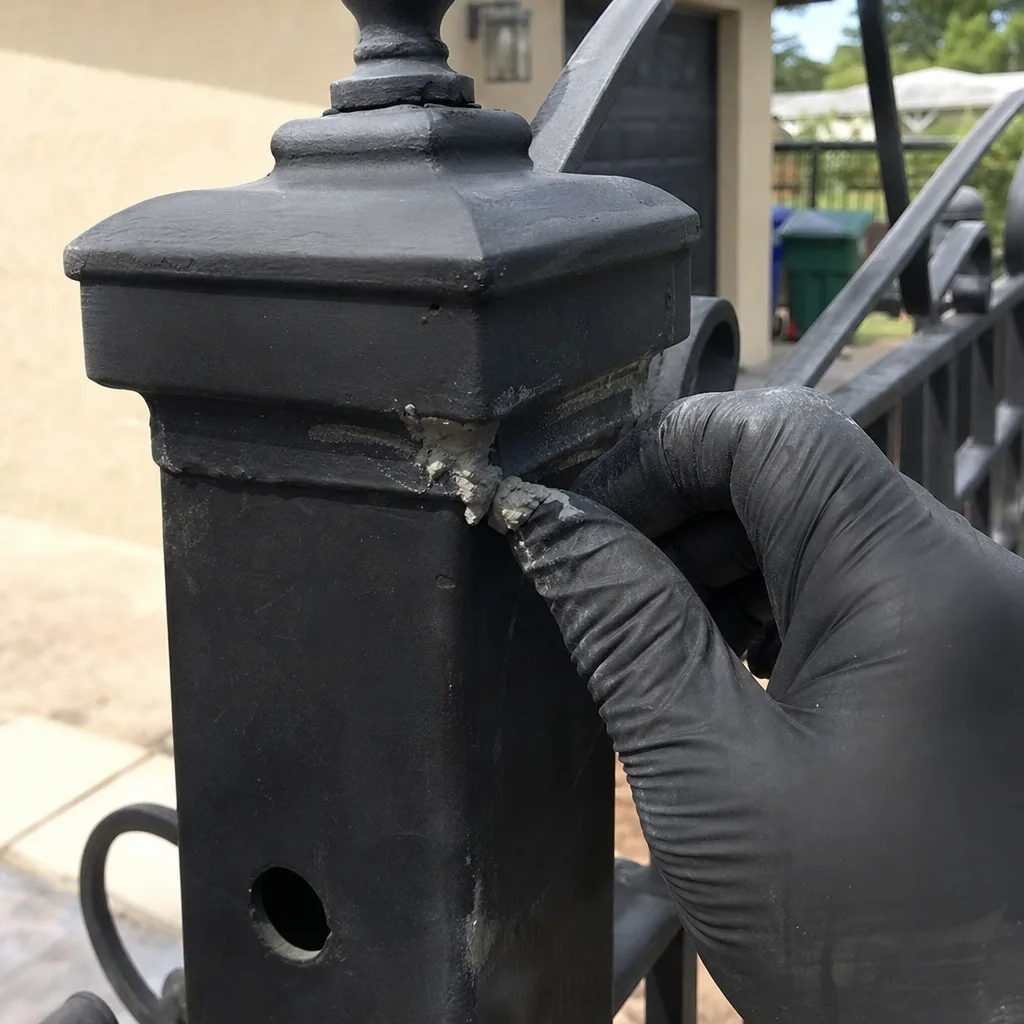
“Like-for-like replacement” is the phrase the Florida Building Code uses to describe repair work that does not trigger a permit. The standard is narrower than most homeowners assume. A replacement qualifies as like-for-like only when the new component matches the old one in size, capacity, voltage, and function, and when nothing about the surrounding structure or electrical system changes.
Replacing a LiftMaster gate motor with another LiftMaster of the same voltage and horsepower on the same circuit is like-for-like. Replacing a BFT 24-volt motor with a 120-volt motor that needs a new line run from the panel is not. That second job is an electrical alteration, and it needs a permit regardless of what the motor costs.
The same logic applies to the gate itself. Swapping a damaged swing gate leaf for a new one of the same dimensions, same weight class, same hinge spacing, and same post anchorage is like-for-like. Installing a heavier gate, widening the opening, or converting from a single swing to a double swing changes the loads on the posts. In Miami-Dade, changing post anchorage loads is structural work, and the like-for-like exemption ends there.
There’s a practical test we use on every job: if the new part requires a different wire gauge, a different breaker, a different mounting plate, or a different post, the work has left the like-for-like definition behind. At that point the homeowner isn’t repairing. They’re altering. And alteration is exactly what permit codes are written to capture.
For gate motor and opener work in Miami Gardens, the distinction saves real money. A direct motor replacement on an existing circuit avoids the permit fee. A motor upgrade that pulls new wire does not. We write the scope and the price before any work starts, and part of that written scope states whether the work is exempt or permitting is required. That’s Haven Standard Clause 1, and it prevents the surprise that comes later, at the worst possible time.
How to Check Whether Prior Gate Work Was Permitted
Miami-Dade County maintains a public portal for searching building permits. If you bought a home in Miami Gardens and the gate was already there, or if a previous homeowner had work done, here’s the exact process for checking whether permits were pulled.
- Go to the Miami-Dade County Building Department’s permit lookup page. The portal is at the county’s main permitting website, under Search Permits.
- Search by your full street address, not your name. Use the same address format that appears on your property tax bill, including the unit or lot number if you have one.
- Filter the results by permit type. You’re looking for Electrical permits and Building permits. A gate with a motor should have at least an electrical permit on record if a new circuit was installed.
- Open each permit and check the description of work. The permit should mention “gate,” “gate operator,” “automatic gate,” or similar language. If it says only “electric” with no detail, call the county and ask for the inspection record.
- Check whether the permit was finaled. A permit that was pulled but never closed is still an open item at resale. An open permit means inspections were never completed, and the county can require closing it before a sale moves forward.
If the search returns nothing for your address, and you have a gate motor installed after the home was built, the prior work was very likely unpermitted. That’s not a guess. It’s the absence of a public record that should exist. The county database goes back decades, so a properly permitted job will be there.
One detail that surprises homeowners: the previous owner’s name on the permit doesn’t matter. What matters is that a permit exists for the address and the scope matches the work. If you find a permit but the scope doesn’t mention the gate, dig deeper. Contractors sometimes pull a broad electrical permit that covers interior work and quietly adds the gate circuit under a scope of work that was never inspected to match.
Vance Gate Repair services can’t pull a permit retroactively. What we do is assess the installation, photograph the wiring, check the panel connection, and write down exactly what’s present and what’s missing from the county record. That documentation gives you, or a licensed electrician, the starting point for remediation before listing the home. Most gate repair companies won’t do this. The habit came out of Adrian Vance’s commercial access-control work, where a missing permit record on a security gate had consequences measured in contract compliance, not just home sale delays.
How HOA Requirements in Miami Gardens Stack on Top of County Code
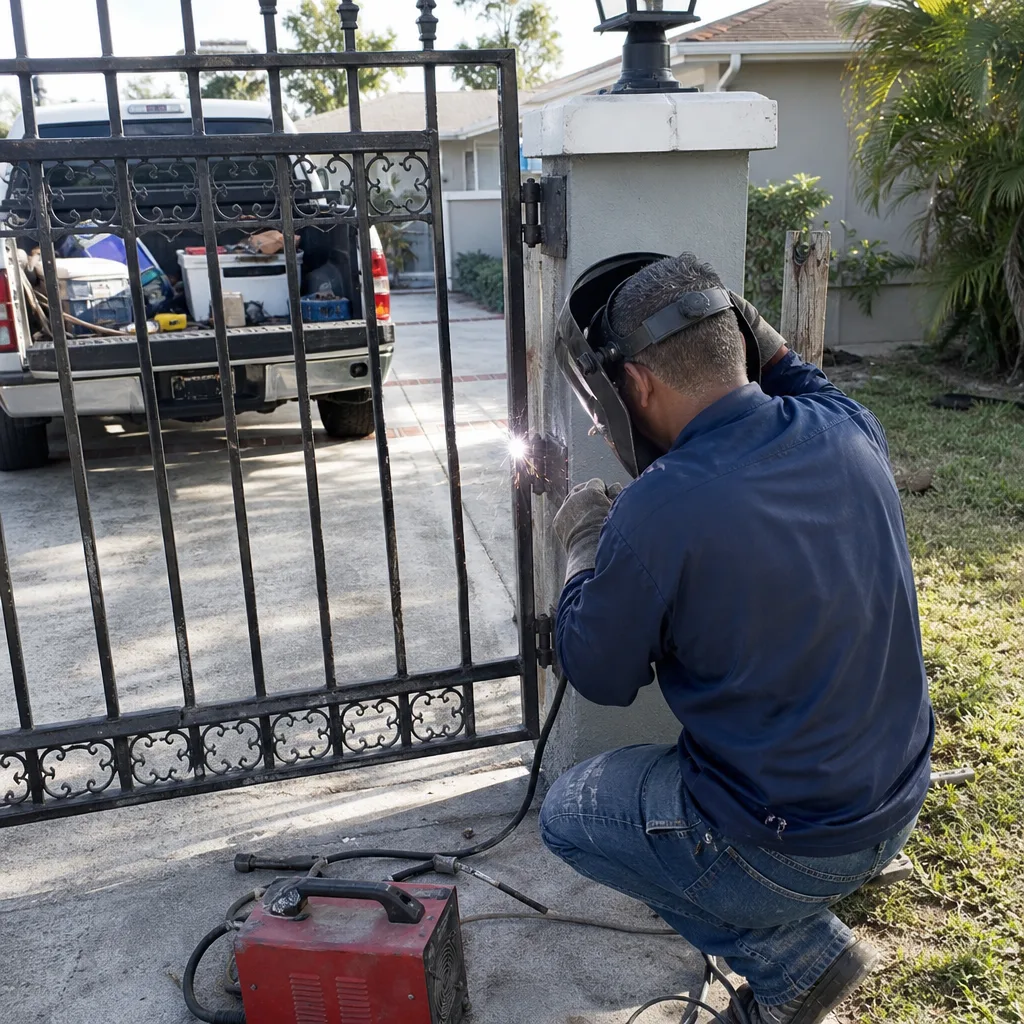
Miami Gardens has a high concentration of planned communities and gated subdivisions, and most of them have an HOA with architectural control language that touches gates. The HOA layer is separate from Miami-Dade County code. Complying with one does not satisfy the other, and the two rarely line up cleanly.
County code cares about safety: electrical load, structural load, proper grounding, proper bonding, and the presence of required safety devices like photo-eyes and edge sensors on automatic gates. The HOA cares about appearance and consistency: gate height, gate material, gate color, setback from the property line, and whether the style matches the rest of the community.
A homeowner can replace a driveway gate with a motor and fully comply with county requirements while violating the HOA’s architectural standards. The reverse is just as common: an HOA-approved gate design that doesn’t meet Miami-Dade’s wind load requirements. Florida’s building code has strict wind load provisions, and gates in Miami Gardens are subject to them. A decorative gate that looks fine on paper but isn’t engineered for the wind zone is a code problem no HOA approval fixes.
Before any gate installation in Miami Gardens, we recommend pulling two documents: the county’s permit requirements for the specific scope and the HOA’s architectural guidelines for gates. Most HOAs in Miami Gardens have a published design standard. It’s often a one-page PDF that states maximum height, approved materials, and whether automatic gates require submittal to the board before installation. Getting both documents on the table before work starts costs an afternoon. Fixing a non-compliant gate after installation costs thousands and can end with an order to remove the gate entirely.
One more interaction to understand: if your HOA requires approved gate drawings and the county requires an engineer’s wind load calculation, those two submittals are often cross-referenced. The Miami-Dade permitting office may want to see the HOA approval letter before issuing the permit, or the HOA may want to see the permit before granting approval. The order depends on the community’s governing documents. Don’t sequence them yourself. A licensed contractor who works in Miami Gardens regularly will know which document each body wants first.
What Happens at Resale When Gate Work Wasn’t Permitted
The resale problem is where unpermitted gate work finally shows up, and it shows up in one of three ways. Understanding the mechanics helps homeowners decide whether to remediate before listing rather than after an offer falls apart.
The first path is the buyer’s home inspection. Florida home inspectors are not code enforcers, but their standards of practice include checking electrical panels and inspecting exterior structures. A sharp inspector who sees a gate motor wired into a panel without a corresponding permit on record will flag it. The buyer then asks for either a permit to be pulled retroactively or a credit at closing. A retroactive permit usually means opening the wall or trenching to expose the wiring for inspection, which is far more expensive than permitting the work correctly the first time.
The second path is the buyer’s lender. FHA, VA, and conventional loans all have requirements about unpermitted additions and alterations. An automatic gate with an electrical circuit that appears on no permit record can become an underwriting condition. The lender may require the permit issue resolved before close. Lenders rarely care about the gate’s appearance. They care about the unpermitted electrical work, because that’s a property condition risk.
The third path is the title search. Title companies in Florida don’t typically research permits, but a buyer’s agent who knows Miami-Dade will sometimes run a permit search as part of due diligence. If the search turns up nothing for an obvious gate installation, the buyer has leverage. The seller either gets the permit retroactively or concedes a price reduction.
The remediation path is not as bad as it sounds. In most Miami Gardens cases, the gate itself is fine. The issue is proving the electrical work meets code. A licensed electrician opens the panel, inspects the circuit, brings any deficiencies up to code, and then works through the county’s process for after-the-fact permits. Miami-Dade does have a process for this. It’s slower and more expensive than a standard permit, but it resolves the issue conclusively. Doing it before listing costs less than doing it under the pressure of a contract deadline.
Why Written Records Matter More Than Most Homeowners Think

Even when gate work is fully permit-exempt, the written record still matters. At resale, an inspector sees a gate motor on the panel and has no way to know whether it was part of the original build, added with a permit, or added illegally. A dated receipt showing a like-for-like replacement on an existing circuit often resolves the question on the spot.
That’s why we leave a documented photo record on every visit. Under Haven Standard Clause 4, every job for Vance Gate Repair includes photos of what was found, what was adjusted, and what was installed. The homeowner keeps a copy, and the file stays in our job record. Six years later, when a buyer’s inspector asks about the gate, the seller has visual proof of exactly what was done and when. That record doesn’t replace a permit where a permit was required. But for permit-exempt work, it’s the difference between a clean inspection and an argument with a buyer who has every reason to be cautious.
We’ve seen this save sales in Miami Gardens. A home on a canal lot with a gate repair history going back eight years. The current owner had a folder with every receipt and photo from every visit. The inspector flagged the gate panel, the seller produced the folder, and the issue went away in ten minutes. The seller later told us that one folder was worth more than the gate itself in the negotiation.
Documentation also protects you from inheriting a previous owner’s problem. If you buy a home with an automatic gate and no records, you don’t know whether that Viking or Linear motor was installed legally. You don’t know whether the photo-eyes were ever checked for compliance with the UL 325 standard that governs automatic gate safety. You own the gate and the liability. Pulling that history together is work, and it’s easier before an incident than after.
Common Mistakes to Avoid
- Assuming all gate work is exempt. Most repair work is, but a new circuit is not. A homeowner who replaces a motor and runs a new line without a permit has created an unpermitted electrical alteration. The gate works fine. The record is a problem.
- Believing a contractor who says “we handle the permit” without verifying. Ask for the permit number before work starts. If the contractor can’t produce one, and the scope needs one, do not proceed. A permit number you can verify on the Miami-Dade portal is the only evidence that matters.
- Checking only the HOA and skipping the county. An HOA approval letter looks official, but it has no authority over county building code. Both layers apply in Miami Gardens. Satisfying one and not the other is how gates get installed twice.
- Treating a motor replacement as a DIY project without checking the electrical circuit. The danger with high-tension springs and heavy gate panels should already steer most homeowners to a professional. Electrical work on a gate circuit carries its own risk: wrong gauge wire, improper grounding, and an overloaded breaker are all fire risks. A professional gate technician should handle anything from the panel outward.
- Waiting until the listing is live to check for permits. The worst time to discover an unpermitted gate installation is one week into the sales contract. The buyer has leverage. The seller is on the clock. Remediating before listing costs less and preserves the sale price.
- Replacing a gate with a heavier model without considering the footings. A thicker steel gate or a solid aluminum panel changes the loads. In Miami-Dade’s wind zone, that’s not cosmetic. An installer should verify the posts and footings are sized for the new gate before the old one ever comes down.
- Ignoring the UL 325 safety requirements on an automatic gate. Automatic gates in Florida fall under UL 325, which mandates photo-eyes, edge sensors, and proper force settings. A gate without these isn’t just a code issue. It’s a safety hazard. If a gate closes on a child or a vehicle because the safety devices were never installed, the homeowner’s liability is immediate and serious.
When to Call a Professional
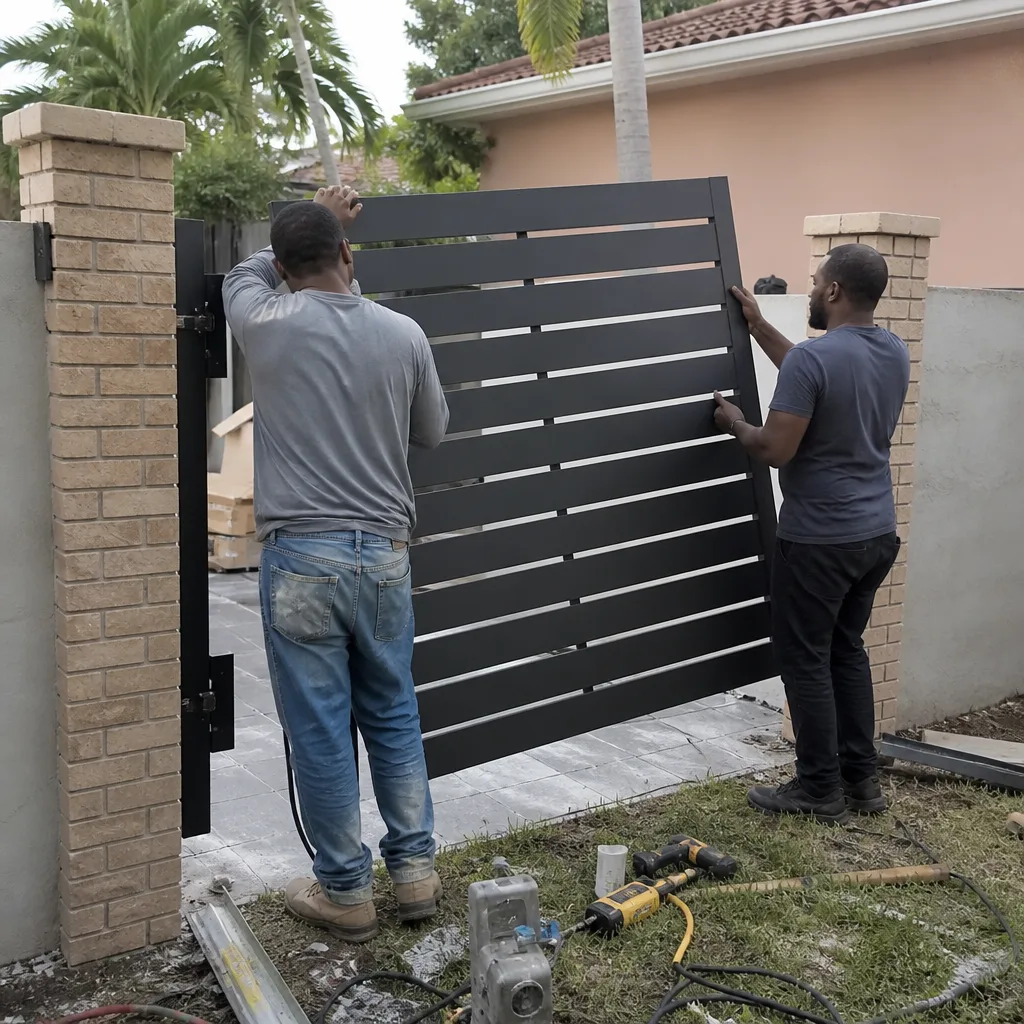
A professional is warranted the moment a permit question touches your gate, but also earlier than that. If your gate motor is run from an electrical circuit and you don’t know whether that circuit was ever permitted, call a professional to assess and document the installation. If you’re selling a home and an inspector flagged the gate, call before you negotiate a price reduction. If you bought a home and the gate panel looks like a previous owner’s weekend project, call now rather than later.
Vance Gate Repair Miami Gardens offers free estimates in Miami Gardens. We’ll assess the gate, check the panel, photograph the installation, and give you a written scope and price before any work begins. Call (786) 789-0087 for a free estimate.
Frequently Asked Questions
No, a straight motor replacement on an existing electrical circuit is exempt from permitting in Miami-Dade County. The permit requirement begins when a new circuit is run, a new outlet is added, or the electrical system is altered to support the motor. If your gate motor repair stays on the existing circuit, no county permit is required. Call (786) 789-0087 for an exact assessment of your specific situation.
Remediation costs depend on whether the electrical work can be brought into compliance without extensive opening of walls or trenching. A straightforward after-the-fact electrical permit with minor corrections typically runs a few hundred dollars in county fees plus electrician time. If the wiring is embedded in concrete or the circuit needs re-pulling from the panel, the cost climbs. The first step is a documented assessment of what’s present, which we provide before any remediation work is priced.
Yes. Miami-Dade County’s permit search portal is public and searchable by address. Enter your street address and look for Electrical or Building permits that mention gates, gate operators, or automatic gates. A search that returns no results for an installed gate motor strongly suggests the work was done without a permit. The portal is free to use.
No. An HOA in Miami Gardens enforces its own architectural standards, which cover appearance and community consistency. The county permit covers safety and code compliance. The two are separate governing bodies. You can be fully HOA-compliant and fully in violation of county code, or vice versa. Both layers need attention on any new gate installation.
Like-for-like replacement means the new part matches the old part in size, voltage, capacity, and function, and no part of the electrical or structural system changes. A new installation means something about the system is different: a new circuit, new posts, a heavier gate, a different opening. Like-for-like work is generally permit-exempt. New installations cross the permitting threshold and require either an electrical permit, a structural permit, or both.
Start by documenting what’s installed: the motor brand, the wiring path, the panel connection, and the gate structure. Then have a licensed electrician or gate professional assess whether the installation meets current code. If it does, a retroactive permit through Miami-Dade’s after-the-fact process is possible. If it doesn’t, the deficiencies get corrected first. Resolving this before listing costs less and gives you a clean disclosure position. Vance Gate Repair can provide the initial documentation at no charge.
Automatic gates fall under UL 325, a national safety standard that Miami-Dade enforces. It requires photo-eyes to prevent the gate from closing on a vehicle or person, edge sensors that reverse the gate on contact, and force settings that limit closing pressure. A gate that lacks these devices is not code-compliant, and if an automatic gate injures someone, the homeowner may face liability that insurance doesn’t cover. If your gate operator is a Ghost Controls, Viking, or BFT unit, the safety requirements are identical: UL 325 applies regardless of brand.
The Bottom Line
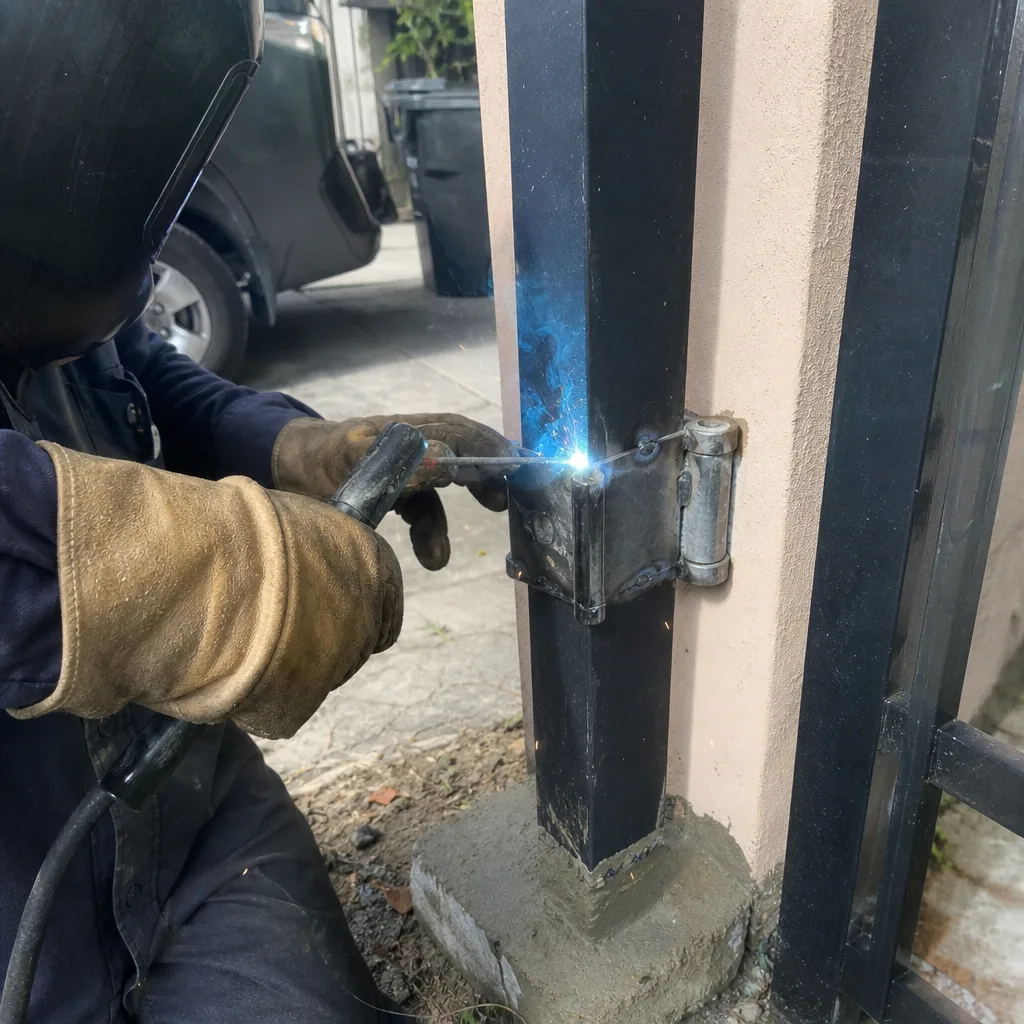
Most gate repairs in Miami Gardens are permit-exempt, and that’s an easy thing for a contractor to tell you. The harder truth is that the exceptions are specific and expensive to ignore. New electrical circuits, structural post work, and total project values above the county’s threshold all require permits before work starts. Verifying whether your gate’s prior work was permitted takes minutes on the Miami-Dade portal. Fixing it after it’s been flagged at resale takes weeks and costs real money. Check the record before you list. Pull both the county requirements and the HOA standards before you install. And keep the written record of every gate job, because the paper trail outlasts the motor. Browse our more guides & resources for additional homeowner tips.
Call Vance Gate Repair Miami Gardens at (786) 789-0087 for a free estimate. The price is in writing before work starts, and the documentation is in your hand before we leave.
Written by Adrian Vance, Owner at Vance Gate Repair Miami Gardens, serving Miami Gardens since 2014.